Golf carts look calm, quiet, and easy to control. That appearance can create dangerous confidence. A narrow path, wet grass, or a sudden passenger movement may change the situation quickly. So, what are the safety rules for driving a golf cart? Safe driving begins with a seatbelt, a controlled speed, and a clear understanding of the cart’s limits.
The Nationwide Children’s Hospital Center for Injury Research and Policy reported an estimated 156,040 golf-cart-related injuries in the United States from 2007 to 2016. That equals about 15,604 injuries each year. Falls accounted for nearly half of the reported cases. These figures show why operators should inspect tires, brakes, steering, lights, and mirrors before every trip. The U.S. Consumer Product Safety Commission also identifies passenger falls, rollovers, and collisions as major golf-cart hazards. Small checks matter.
Dr. Gary Smith, director of the Center for Injury Research and Policy, has emphasized that “golf carts are motor vehicles, not toys.” This practical warning applies to Chinese factories, resorts, communities, and private facilities. Operators should follow the manufacturer’s instructions, use designated routes, keep both hands available, and never overload the cart. Passengers should remain seated, with arms and legs inside. Children require close supervision. A cart can stop suddenly. A checklist cannot prevent every mistake. However, it can expose careless habits before they become injuries. This guide examines reliable golf-cart safety rules, with attention to real driving conditions, operator experience, and responsible fleet management.
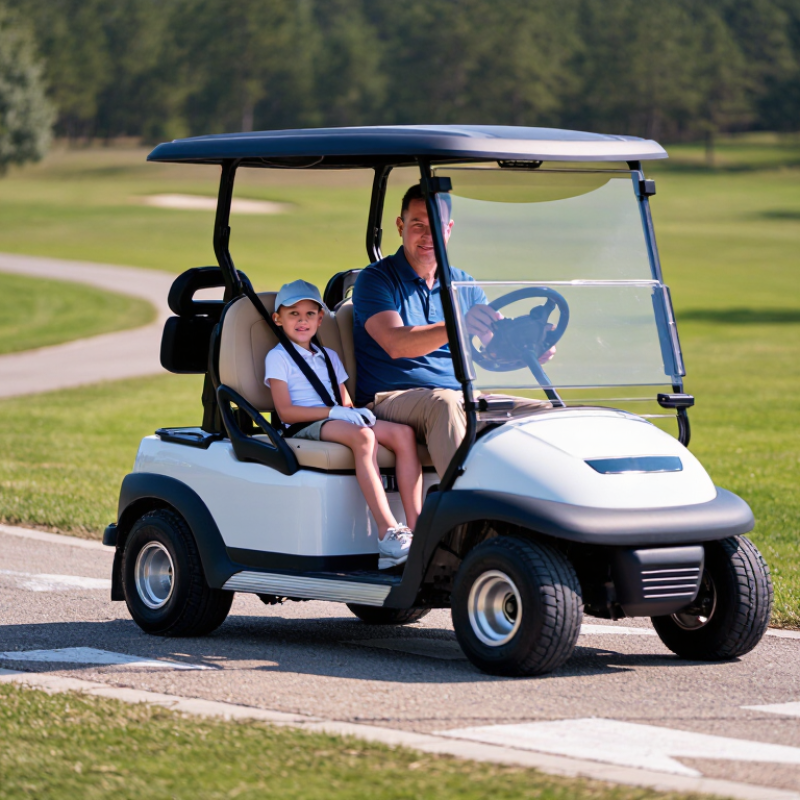
Golf Cart Safety Basics and Legal Requirements in China
China Best Golf Cart Safety Rules for Safe Driving?
Golf cart safety in China depends on location and vehicle classification. Many carts operate on private roads, resorts, campuses, factories, and residential communities. Public-road use may require local registration, insurance, approved lighting, and a qualified driver. Requirements differ between cities and districts. Always confirm details with the local transport authority or property manager.
Drivers should follow posted speed limits and use marked routes. Seat belts must be worn when provided. Do not carry more passengers than the seats allow. Keep both hands near the steering wheel, especially on slopes or wet surfaces. Check the brakes, tires, lights, horn, and battery area before each trip. A small inspection can prevent a serious incident. However, inspection habits are often inconsistent. That weakness deserves attention.
Tips: Drive slowly near pedestrians and blind corners. Use the horn briefly before turning. Park with the brake engaged. Never use a phone while moving. Keep children supervised, even on private property. If signs are unclear, stop and ask the site manager before entering a public road. A qualified local inspector should review unfamiliar routes and confirm the applicable legal requirements.
Pre-Drive Checks for a Safe Golf Cart
Before driving a golf cart, inspect it as carefully as you would inspect any small vehicle. Walk around the cart and check the tires for low pressure, cracks, or uneven wear. Look beneath the frame for fresh fluid, loose parts, or damaged wiring. Test the brakes on level ground. They should respond firmly without grinding or excessive travel.
Sit in the driver’s seat and confirm that the steering moves smoothly. Check the accelerator, reverse control, horn, lights, and mirrors. Make sure the seats are secure and the floor is clear of bags or tools. Battery-powered carts should have clean, tight connections and no swelling or unusual odor. Do not ignore a small warning sign.
Before moving, adjust your seat and fasten the restraint if one is provided. Ask passengers to sit fully inside the seating area, with hands and feet away from the wheels. Scan the route for pedestrians, slopes, loose gravel, and low obstacles. Keep the cart in neutral while starting it, following the vehicle’s operating instructions.
A quiet brake can still be weak. I learned this after relying on sound instead of pedal pressure during a routine check. That mistake changed my inspection habits. A checklist helps, but it cannot replace judgment. If the cart feels different from yesterday, stop and investigate before driving.
Safe Driving Practices on Roads and Private Grounds
China Best Golf Cart Safety Rules for Safe Driving?
Safe Driving Practices on Roads and Private Grounds
A golf cart feels gentle, but its short wheelbase can react sharply on uneven surfaces. Before moving, inspect the brakes, steering, tires, lights, mirrors, and battery area. Sit fully inside the designated seat and secure every available belt. Carry only the number of passengers the seats support. On public roads in China, drive only where local signs and authorities permit these vehicles. Requirements may differ between cities and road types. Keep a charged phone nearby, but never handle it while moving.
On roads, follow marked lanes and local traffic directions at a calm, predictable speed. Slow before intersections, driveways, crossings, and parked vehicles. Watch for bicycles, children, motorcycles, and pedestrians hidden by larger cars. Leave extra distance because carts may stop slowly on slopes or wet pavement. Use headlights in poor visibility and signal early. Avoid sudden turns. Never carry loose tools or tall loads that block the driver’s view. Remind passengers to stay seated.
Private grounds still require disciplined driving. Set a walking-speed limit near buildings, gathering areas, and maintenance crews. Mark blind corners with mirrors or warning signs where practical. Reduce speed before slopes, puddles, and sharp turns. Wet turf can feel firm, then slide. Park with the brake engaged, power off, and keys removed. Store the cart in a dry, ventilated area away from heat. A rushed safety check is easy to skip when people are waiting. That mistake deserves honest reflection. Recheck after rain, heavy use, or any unusual noise.
China Best Golf Cart Safety Rules for Safe Driving
Estimated Total Stopping Distance at Different Speeds
Stopping distance increases rapidly as speed rises. This illustration combines an estimated
1.5-second driver reaction distance with braking on dry, level pavement at approximately
3 m/s² deceleration. Actual results vary with tires, brakes, load, slope, weather, and surface conditions.
Safe driving practices include obeying posted speed limits, slowing before turns and crossings,
wearing seat belts where fitted, keeping passengers seated, avoiding overloaded vehicles,
and giving pedestrians and other road users sufficient space.
Passenger, Pedestrian, and Load Safety Rules
Passenger, Pedestrian, and Load Safety Rules
Safe golf cart driving begins with controlling the people and equipment around the vehicle. Every passenger should remain seated, facing forward, and hold a stable handrail. Never allow anyone to stand on the rear step or sit on the side edge. Keep children supervised, especially near turns, slopes, and crowded paths. Before moving, check that doors, rails, and seats are secure.
Pedestrian safety needs patience. Drive slowly near entrances, blind corners, parked vehicles, and shared walkways. Keep your eyes moving, not fixed only on the path ahead. Use the horn briefly when visibility is limited, but never treat it as permission to rush. Leave extra space around walkers, cyclists, and pets. A common mistake is assuming pedestrians have seen the cart. They may not.
Tips: Place heavy loads low and near the center. Secure boxes, tools, and bags before driving. Do not overload the cart or block the driver’s view. Check tire condition, brakes, steering, and lights before each trip. Small defects can become serious quickly. I still find that rushed inspections miss loose straps and low tire pressure. Slow down, check again, and ask whether every passenger and load would remain stable during sudden braking.
Emergency Response, Maintenance, and Driver Responsibility
China Best Golf Cart Safety Rules for Safe Driving?
Safe driving begins before the cart moves. Inspect the brakes, steering, tires, lights, horn, and seat belts. Check battery terminals for looseness, corrosion, or unusual heat. Keep the charging area dry and well ventilated. Never carry more passengers than the seats allow. Slow down near corners, ramps, wet ground, and crowded paths. A short pre-drive check can prevent a serious mistake.
Emergency response must be simple and visible. If the cart behaves strangely, stop, switch off the power, and move away from traffic. Do not touch damaged wiring or leaking battery fluid. Warn nearby people and contact the site supervisor or trained maintenance worker. In a collision, protect injured people from moving vehicles, call local emergency services, and avoid moving anyone with possible spinal injuries. Small details matter, such as knowing the nearest first-aid kit and keeping a phone charged.
Driver responsibility continues after parking. Set the parking brake, remove the key, and leave the cart on stable ground. Report weak brakes, reduced range, odd noises, or cracked tires immediately. Maintenance staff should record inspections, repairs, charging times, and recurring faults. A checklist helps, but it is not perfect. People may tick boxes without looking closely. That is why supervisors should occasionally observe real driving, not only review paperwork. A careful driver also admits uncertainty, slows down, and asks for help before a minor fault becomes an emergency.
FAQS
Check the tires for low pressure, cracks, and uneven wear. Look beneath the frame for leaks, loose parts, or damaged wiring. Test the brakes on level ground. They should feel firm.
Sit inside and move the steering gently from side to side. Test the accelerator, reverse control, horn, lights, and mirrors. Secure the seats. Remove bags and tools from the floor.
Battery connections should be clean and tight. Watch for swelling, corrosion, unusual heat, or a strange odor. Do not touch damaged wiring or leaking battery fluid. Ask trained maintenance staff for help.
Carry only the number of passengers supported by the seats. Everyone should sit fully inside the seating area. Keep hands and feet away from wheels. Fasten every available restraint.
Drive on public roads only where local signs and authorities permit them. Requirements can differ by city and road type. Follow marked lanes and traffic directions. Check local rules before departure.
Use a calm, predictable speed. Slow before intersections, slopes, crossings, sharp turns, and parked vehicles. Watch for children, bicycles, motorcycles, and hidden pedestrians. Avoid sudden steering.
Stop immediately and switch off the power. Move away from traffic if possible. Warn nearby people. Report weak brakes, odd noises, cracked tires, or reduced range. Do not continue just because the cart still moves.
Protect injured people from moving vehicles. Contact local emergency services. Avoid moving anyone with a possible spinal injury. Know the nearest first-aid kit and keep a phone charged. Small details matter.
Park on stable ground with the parking brake engaged. Switch off the power and remove the key. Store the cart in a dry, ventilated place away from heat. Record inspections, charging times, and repairs.
No. People sometimes tick boxes without looking closely. A quiet brake can still be weak. If the cart feels different from yesterday, stop and investigate. Slowing down is not failure.
Conclusion
This guide explains the essential principles of safe golf cart operation in China, beginning with awareness of local traffic rules, site regulations, and any licensing or registration requirements that may apply. What are the safety rules for driving a golf cart? Drivers should complete a pre-drive inspection, checking the brakes, steering, tires, lights, battery condition, warning signals, and seat belts before use. Any defect should be reported and repaired before driving.
Safe operation requires moderate speed, careful turning, full attention, and extra caution near pedestrians, entrances, slopes, and shared roads. Drivers should yield appropriately, maintain a safe distance, avoid distracted or impaired driving, and use designated routes whenever possible. Passengers must remain seated, keep their hands and feet inside, and never exceed the approved capacity. Loads should be balanced and secured. The guide also covers emergency response, routine maintenance, reporting hazards, and the driver’s responsibility to protect passengers, pedestrians, and surrounding property.

 Tulip Cart