When considering golf carts, many buyers wonder, "What is the difference between 36V and 48V golf carts?" Understanding this distinction is crucial for making an informed decision. Both types offer unique advantages and potential drawbacks.
A 36V golf cart generally has a lower speed and range. It may be suitable for short trips on flat terrain. In contrast, a 48V cart provides better power and performance. It can tackle steeper hills and cover longer distances. However, it also comes with potentially higher costs and maintenance needs.
Choosing between these options requires careful consideration. Factors such as terrain, speed, and battery life are essential. Buyers should reflect on their specific needs. Personal experience and preferences heavily influence the right choice. A well-informed decision can enhance your golfing experience significantly.
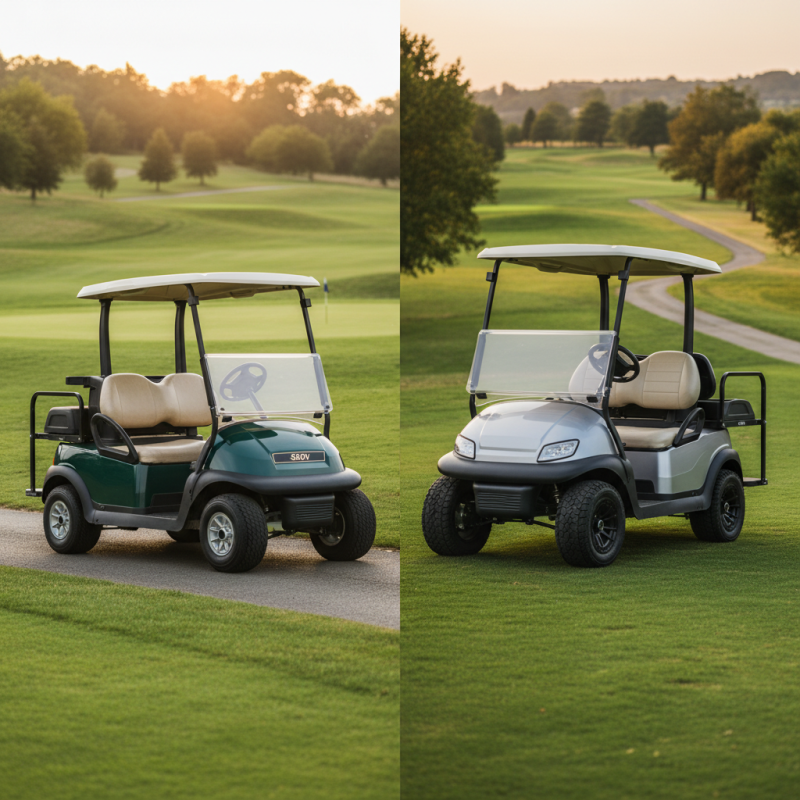
When considering golf carts, the choice between 36V and 48V models is crucial. A 36V system typically features three 12V batteries, while a 48V model uses four 12V batteries. This fundamental difference impacts performance and efficiency. According to a report by the National Golf Cart Association, 48V systems are generally more efficient. They provide higher torque, which translates to better acceleration and hill-climbing ability.
The battery life and range are significant factors. A 48V golf cart can typically travel longer distances on a single charge. Data suggests that a standard 48V system can last about 25% longer compared to its 36V counterpart under similar conditions. However, 36V models may have a lower initial purchase cost. This makes them appealing to casual users who might not need extensive range or power.
Moreover, maintenance plays a role in this decision. While both systems require regular battery checks and charging, 36V batteries can be more affordable to replace. Users should weigh their specific usage patterns against these cost factors. Understanding your needs is essential when choosing the right golf cart.
When comparing 36V and 48V golf carts, battery capacity plays a key role. A 48V system generally offers higher energy storage, allowing for longer operation times. This translates to extended ranges on the course, making trips more enjoyable. A 36V battery, while adequate for shorter rounds, often struggles in performance during prolonged use.
Performance is another critical aspect. A 48V golf cart provides smoother acceleration and better climbing ability. This can be significant on hilly courses. Additionally, 48V systems may support more powerful motors, contributing to enhanced speeds and efficiency. Users often notice a difference in responsiveness, especially in challenging conditions.
Real-life experience shows that battery efficiency can vary. For instance, terrain and driving style influence battery life. Golfers who frequently drive over uneven ground might find the 36V system insufficient. However, 36V carts can still be effective for casual players on flatter courses. It reflects how each system has its strengths and weaknesses, depending on user needs.
When considering golf carts, many users wonder about the advantages of 36V models. One key feature is the weight. A 36V golf cart is often lighter than its 48V counterpart. This makes it easier to maneuver on the course. Players appreciate the nimbleness, especially in tight spots.
Another advantage is cost-effectiveness. Generally, 36V golf carts are less expensive to purchase and maintain. Battery replacements for 36V systems can also be cheaper over the long run. Users often find that their initial investment provides good value.
However, some may find they need more power. If speed is a priority, then a 48V model may appeal more. Understanding personal preferences and requirements can greatly influence the choice. For some users, the 36V option could feel underwhelming in performance. Others might enjoy its simplicity and ease of use. It’s essential to weigh these factors carefully before making a decision.
This chart compares the performance metrics of 36V and 48V golf carts including speed, range, battery life, weight, and cost. It illustrates that while 48V golf carts typically offer higher speed, range, and battery life, they also come at a higher cost compared to their 36V counterparts.
When considering the advantages of 48V golf carts, several key factors come into play. One notable benefit is their increased power output. A 48V system allows for stronger acceleration and a higher top speed. Golfers can navigate the course more efficiently. This can significantly enhance the overall experience on the fairway.
Another advantage is better energy efficiency. With a higher voltage, the golf cart can run longer on the same amount of energy. This translates to less frequent charging and lower maintenance costs over time. Many users find this aspect particularly appealing. The extended range means players can focus on their game rather than worrying about battery life.
However, not every aspect of 48V golf carts is flawless. They can be heavier and more complex than their 36V counterparts. This could lead to potential issues during repairs or upgrades. Owners need to consider their specific needs and whether the added power outweighs these potential drawbacks. Understanding both options is crucial for making the right choice.
When choosing between 36V and 48V golf carts, several factors come into play. A 36V system typically offers a lighter design. This can be beneficial for certain terrains. However, a 48V system can deliver more power. It provides better performance on steep hills and longer distances. If speed is your priority, 48V might be the better choice.
Battery life also differs significantly. Generally, a 48V battery can run longer before needing a recharge. This feature is essential for larger golf courses. However, charging times can be longer, and this might affect your schedule. Also, the initial cost of 48V systems may be higher. Maintenance and repairs can be more complex too.
Consider your specific needs. Are you cruising on flat land or tackling rugged terrain? Evaluate how often you golf. Frequency impacts battery life and performance. Think about how many passengers you usually carry. A heavier load on a 36V cart might reduce its range. Reflect on these points to make a well-informed decision.
: The main difference is the number of batteries. A 36V system uses three 12V batteries, while a 48V system uses four.
Generally, 48V systems deliver higher torque. This results in better acceleration and climbing ability on hills.
A 48V golf cart usually has longer battery life. It can typically run about 25% longer than a 36V cart.
Yes, 36V models can have a lower initial purchase cost. They may suit casual users who need less range or power.
Both systems require regular checks. However, 36V battery replacements can be more affordable than 48V counterparts.
The terrain you golf on matters. A heavier load on a 36V cart might reduce its range. Assess your conditions.
Yes, 48V carts usually take longer to charge. This can impact how you plan your golfing days.
Consider your golfing frequency, terrain type, and number of passengers. Reflecting on these aspects leads to a better decision.
If speed is crucial for you, a 48V cart is likely the better option. It provides more power for quicker movement.
A lighter design in a 36V cart can perform better on flat terrains, but it may struggle with heavier loads.
Golf carts are available in different voltage options, primarily 36V and 48V, and understanding the differences between them is crucial for prospective buyers. What is the difference between 36V and 48V golf carts? The main distinctions lie in battery capacity and performance. 36V carts typically have a lower capacity, which may result in shorter ranges and less powerful acceleration compared to 48V carts.
On the other hand, 48V golf carts provide more robust performance, enabling better speed and faster hill climbing. Additionally, while 36V carts can be more cost-effective, 48V models often offer enhanced efficiency and longevity. When choosing between the two, factors such as intended use, terrain, and budget should also be taken into consideration to ensure the best fit for your golfing or recreational needs.

Tulip Cart