Why is my golf cart battery leaking acid? It is a serious question, especially when you find a wet battery tray, white crust, or a sharp sulfur smell. Lead-acid batteries can leak because of overcharging, excessive heat, physical damage, loose connections, or incorrect watering. Sometimes, the cause is less obvious. A battery may appear normal while electrolyte slowly escapes around a cracked case or vent.
Safety comes before diagnosis. Turn off the charger, keep flames and sparks away, and wear acid-resistant gloves and eye protection. Do not touch the liquid with bare hands. If acid reaches your skin, rinse immediately with plenty of clean water and seek medical advice if irritation continues. A qualified technician should inspect swollen batteries, damaged cables, and severe corrosion. Do not keep using a battery with a cracked case.
The repair depends on the cause. A technician may test each battery, inspect the charger, clean corrosion safely, and replace damaged components. Overfilled cells can spill during charging, while undercharging may create other battery problems. Follow the manufacturer’s water and charging instructions carefully. Sealed AGM batteries require different handling and should not be opened.
In practice, I would photograph the leak before cleaning it. That small detail can reveal where the fluid started. Still, visual clues are not proof. Battery acid can travel across trays and make the source look misleading. This guide explains common causes, safe checks, repair options, and prevention steps without encouraging risky shortcuts.
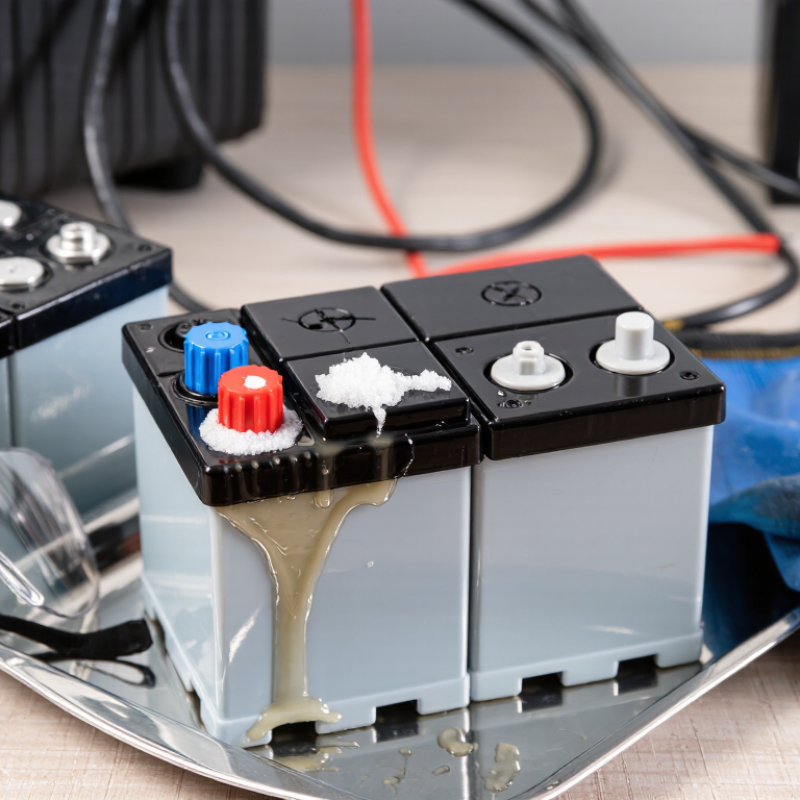
Why Is My Golf Cart Battery Leaking Acid and How to Fix It?
A leaking golf cart battery usually points to overcharging, physical damage, or poor maintenance. In flooded lead-acid batteries, excessive charging creates heat and gas. Pressure can force electrolyte through the vents. A charger with the wrong settings may worsen this problem.
Cracked cases are another common cause. A loose battery, rough terrain, or accidental impact can damage the plastic housing. Look for wet areas, white crust, swollen sides, or a sharp sulfur smell. Overfilled cells may also spill during charging. Water should be added only to the correct level, and only after charging, unless the battery instructions say otherwise.
Check the battery when the cart is parked, cool, and disconnected from the charger. Wear acid-resistant gloves and eye protection. Keep sparks and flames away. I have seen owners wipe the outside and assume the problem is solved. That can hide a continuing leak. A damaged battery usually needs professional replacement, not a patch. For a small external spill, carefully use an appropriate neutralizing solution, then rinse the area according to the service manual. Never pour cleaning chemicals into the battery cells. The exact cause can be easy to misread, especially when corrosion has spread around the terminals. Have a qualified technician test the charger, cables, and battery voltage before returning the cart to service.
A leaking golf cart battery needs careful identification before any repair.
Sulfuric acid may appear as clear liquid, dark moisture, or crusty white corrosion around the case.
Check the battery sides, seams, caps, and terminals. A swollen case or sharp chemical smell also signals trouble.
Do not touch the liquid with bare skin. Keep your face away from the battery.
Turn off the charger and unplug it before inspecting.
Wear acid-resistant gloves, eye protection, long sleeves, and closed shoes.
Work outdoors or in strong ventilation.
A small damp mark can be easy to dismiss. That is a mistake I would not repeat.
Never test a suspected leak by wiping it with your fingers.
Use a flashlight, not an open flame, and look for fresh drips after the battery has rested.
If the case is cracked, bulging, hot, or actively leaking, stop using the cart and contact a qualified battery technician. Damaged batteries usually require replacement, not a quick patch.
Tips:
When your golf cart battery starts leaking, stop charging immediately. Turn off the cart, remove the key, and keep sparks away. Open the area for fresh air. Battery acid can burn skin and damage metal surfaces, even when the leak looks small. Wear chemical-resistant gloves, safety glasses, and long sleeves before checking the battery.
Do not touch the liquid with bare hands. Do not wipe it toward your shoes or other batteries. If acid reaches your skin or eyes, rinse with clean running water for at least 15 minutes and seek medical care. For a small spill outside the battery, carefully use baking soda around the liquid until bubbling stops. Never pour water into the battery or add baking soda inside it. That can worsen the damage.
Look for a cracked case, swollen sides, loose terminals, or a damaged vent cap. A cracked or bulging battery should be replaced, not patched. Place the damaged unit in a suitable acid-resistant container, if it can be moved safely, and contact a qualified battery technician. I would avoid disconnecting wet terminals in a hurry; that mistake can create sparks. Clean corrosion only after the area is safe, then inspect the charger and cables. The leak may signal overcharging, vibration, age, or poor maintenance. One careful inspection can prevent a second failure.
A leaking golf cart battery usually points to overfilling, overcharging, physical damage, or a cracked case. Stop charging immediately and move people away from the area. Sulfuric acid can burn skin and eyes, while charging batteries may release hydrogen gas. OSHA lists a 1 mg/m³ permissible exposure limit for sulfuric acid, so ventilation is essential during cleanup.
Wear chemical-resistant gloves, eye protection, long sleeves, and closed shoes. Do not touch the spill bare-handed. For a small spill, carefully cover the liquid with baking soda. Fizzing means neutralization is occurring. Add more until bubbling stops. Then collect the residue with disposable tools and place it in a suitable acid-resistant container. Rinse the cleaned surface with limited water afterward, preventing runoff into drains. Never spray water directly onto fresh acid. It can spread the hazard.
Inspect the battery tray, terminals, cables, and nearby metal parts. White or green corrosion should be removed only after the battery is isolated. Damaged cables and swollen cases need qualified replacement. Do not patch a cracked battery case. A common mistake is wiping too quickly. It leaves acid beneath terminal covers and accelerates corrosion. The Battery Council International reports that lead-acid batteries achieve roughly 99% recycling in the United States, supporting professional collection instead of household disposal. EPA guidance also treats these batteries as recyclable universal waste. Follow the battery recycler’s instructions. Safety glasses matter.
A flooded lead-acid battery normally has an electrolyte specific gravity of about 1.120 when fully discharged and about 1.265 when fully charged. Acid outside the case, around the vents, or on the battery tray indicates a leak, overfilling, overcharging, or electrolyte loss and should be addressed before continued use.
If acid has spilled, wear chemical-resistant gloves and eye protection, switch off and disconnect the cart, and ventilate the area. Carefully neutralize acid on external surfaces with a baking-soda solution, wipe and rinse the affected components without allowing water or neutralizer into the cells, then dry and inspect the case, caps, cables, and tray. Replace a cracked or bulging battery rather than attempting a repair.
I once treated a small wet spot near a golf cart battery as harmless. That was a mistake. Acid leaks often come from overfilling, overcharging, cracked cases, loose connections, or excessive vibration. Prevention starts with a careful inspection after each few rides. Look for dampness, white corrosion, swollen sides, and damaged cables. Do not touch residue with bare hands.
For flooded batteries, check the electrolyte level only after charging, unless the manufacturer states otherwise. The plates should remain covered, but the cells should not be filled to the brim. Use distilled water, not tap water. Overfilling can force acid out during charging. Keep the battery compartment clean, dry, and well ventilated. Never charge a damaged battery.
A compatible charger and correct charging settings also matter. Stop using the cart if the battery becomes unusually hot, smells sharply, or bubbles excessively. A technician should test the charger and inspect the battery case. Secure batteries firmly, because repeated movement can weaken seams and terminals. I have seen owners tighten connections too aggressively, creating more damage. Gentle, even pressure works better. Record inspection dates in a simple notebook. Small habits help reveal changes early. If acid reaches clothing, skin, or eyes, rinse immediately with plenty of clean water and seek medical attention. Dispose of failed batteries through an approved recycling service, not ordinary household waste.
| Leak Cause | Typical Signs | Why It Happens | Recommended Fix | Prevention |
|---|---|---|---|---|
| Overfilled electrolyte | Wet battery top, fluid around the vent caps, or electrolyte pushed out during charging. | Flooded lead-acid batteries expand and produce gas while charging. Excess liquid can be expelled through the vents. | Stop charging and allow the battery to cool. Do not remove electrolyte. Clean the exterior with a baking-soda-and-water solution, keeping the solution out of the cells. Replace the battery if the case is damaged. | After charging, maintain the electrolyte only at the manufacturer's indicated level. Never fill above the internal splash guard or maximum level. |
| Cracked or swollen case | Visible crack, bulging sides, acid pooling beneath the battery, or a strong sulfur-like odor. | Freezing, impact, vibration, age, or severe overcharging can damage the plastic case. | Disconnect the charger, ventilate the area, and avoid touching the liquid. Have the damaged battery removed and replaced by a qualified technician. Do not patch the case. | Secure batteries firmly, inspect the case regularly, and keep the battery compartment clean and dry. Avoid operating or charging a visibly damaged battery. |
| Loose, damaged, or missing vent cap | Moisture or residue concentrated around one cell opening; cap does not seat correctly. | A faulty vent cap may allow electrolyte mist or liquid to escape during charging or movement. | Stop using the battery until the correct replacement cap is installed. Check for case damage or contamination before returning the battery to service. | Keep vent caps clean, correctly installed, and free of blockage. Use only the correct cap type for the battery. |
| Overcharging or incorrect charger | Battery becomes unusually hot, excessive bubbling occurs, water consumption increases, or acid mist appears. | A charger with the wrong voltage profile, a faulty charger, or poor connections can cause excessive gassing and heat. | Stop charging and check the charger, battery configuration, cables, and connections with a qualified technician. Replace a malfunctioning charger before further use. | Use a charger matched to the cart's battery system. Keep charging connections clean and follow the charger and battery instructions. |
| Loose or corroded connections | White, blue, or greenish corrosion, heat at a terminal, slow charging, or a loose cable. | High resistance at a poor connection can create heat, interfere with charging, and contribute to electrolyte mist or terminal damage. | Turn off and disconnect the charging system. Clean corrosion safely, inspect cables and terminals, and tighten connections to the specified torque. | Inspect terminals periodically, keep connections tight, and apply an appropriate terminal protectant after cleaning. |
| Excessive vibration or poor battery restraint | Chafing, cracked covers, displaced batteries, or repeated leakage after driving on rough surfaces. | Movement can damage cases, loosen terminals, and disturb vent caps. | Stop using the cart until the battery hold-downs, tray, cables, and cases have been inspected and repaired or replaced. | Use properly fitted hold-downs without over-tightening. Keep the battery tray free from debris and corrosion. |
| Low electrolyte level or improper watering | Exposed plates, reduced runtime, heat during charging, or fluid spilled around the cells after watering. | Low levels can damage plates, while adding water before charging or filling too high can cause overflow. | If plates are exposed, stop use and seek professional battery service. For routine maintenance, add distilled water at the correct time and level. | For serviceable flooded batteries, check levels regularly and add distilled water after a full charge, unless the battery instructions specify otherwise. Never add acid as routine maintenance. |
| Cold-weather damage | A split case or leakage after storage in freezing conditions, especially when the battery was discharged. | A discharged lead-acid battery has a higher freezing risk than a fully charged battery. Frozen electrolyte can expand and crack the case. | Do not charge or move a frozen or cracked battery. Allow it to be assessed and replaced by a qualified technician. | Store the cart in a suitable environment, keep batteries charged according to the instructions, and inspect for damage before charging. |
Stop charging immediately. Turn off the cart and remove the key. Keep flames, sparks, and smoking materials away. Open doors or windows for fresh air. Wear chemical-resistant gloves, safety glasses, long sleeves, and closed shoes. Do not touch the liquid directly.
Rinse the affected area with clean running water for at least 15 minutes. Remove contaminated clothing carefully. Seek medical care promptly, even if the irritation seems minor. Do not delay because the pain appears manageable.
Keep people away from the area. Wear suitable protective equipment. Carefully place baking soda around the liquid, not inside the battery. Add more until bubbling stops. Collect the residue with disposable tools. Use an acid-resistant container. Never spray water directly onto fresh acid.
No. Replace a cracked, bulging, or badly damaged battery. Do not patch the case. If safe to move, place it in a suitable acid-resistant container. Contact a qualified battery technician. A temporary repair may fail without warning.
Avoid rushing. Wet terminals can create sparks during disconnection. Isolate the battery safely before handling cables or corrosion. Inspect the terminals, tray, cables, and nearby metal parts afterward. Safety comes before speed.
Common causes include overfilling, overcharging, vibration, age, loose connections, and physical damage. A damaged charger can also contribute. Look for damp spots, white corrosion, swollen sides, or excessive bubbling. One cause may be missed during a quick inspection.
Inspect the battery after every few rides. Keep the compartment clean, dry, and well ventilated. Secure the battery firmly without overtightening connections. For flooded batteries, check fluid levels after charging unless instructions say otherwise. Use distilled water. Keep the plates covered, but do not fill cells to the brim.
Stop using it if the battery becomes unusually hot, smells sharply, or bubbles excessively. Also stop when cables are damaged or the case is swollen. Have the charger and battery tested. Failed batteries should go through an approved recycling service, not household trash. I once ignored a small wet spot. That was a mistake.
Why is my golf cart battery leaking acid? Common causes include overfilling, overcharging, damaged battery cases, loose caps, poor ventilation, or natural wear. A leak may appear as wet spots, crusty residue, a sharp sulfur-like smell, or corrosion around the terminals and battery tray. Identifying the problem safely is essential, so turn off the cart, keep away from sparks and flames, wear protective gloves and eye protection, and avoid touching the liquid directly.
If a battery begins leaking, stop using the cart and inspect the battery for cracks, swelling, loose connections, or fluid around the vents. Do not attempt to repair a severely damaged battery; arrange for safe replacement and disposal. Small spills can be neutralized carefully with an appropriate alkaline material, then wiped up using suitable protective equipment. Rinse affected surfaces cautiously, dry them completely, and check terminals, cables, and trays for corrosion. Regularly inspect fluid levels, charging equipment, ventilation, and battery condition to help prevent future leaks.

Tulip Cart