Buying a used golf cart can feel simple. It is not.
A clean body may hide weak batteries, worn suspension, or neglected wiring. The National Golf Foundation reported approximately 531 million rounds played in the United States during 2023. That activity supports continuing demand for reliable golf transportation and course equipment. Market research from Grand View Research also identifies steady growth in the global golf cart market through 2030. More buyers are exploring private, commercial, and recreational uses.
So, what should I look for when buying a used golf cart? Start with evidence, not paint. Ask for maintenance records, battery dates, charger details, and the vehicle identification number. Then inspect the cart in daylight. Check for cracked battery cases, corroded terminals, uneven tire wear, loose steering, and oil around the motor or differential. A quiet test drive matters. So does a cold start.
Battery condition deserves special attention. Trojan Battery recommends regular charging, watering for applicable lead-acid models, and proper testing procedures. Battery replacement can change the real purchase price dramatically. A cart advertised cheaply may need a costly battery pack within months. That is easy to miss.
Do not trust every seller’s estimate. Confirm the cart’s age, voltage, controller type, and load capacity. Electric and gas models require different inspections. Local rules may also restrict road use, lighting, speed, or registration. Verify those requirements before modifying anything.
The following seven tips focus on practical checks, documented condition, and realistic ownership costs. No checklist catches everything. Still, a careful inspection can prevent an attractive mistake. Sometimes, walking away is the smartest purchase decision.
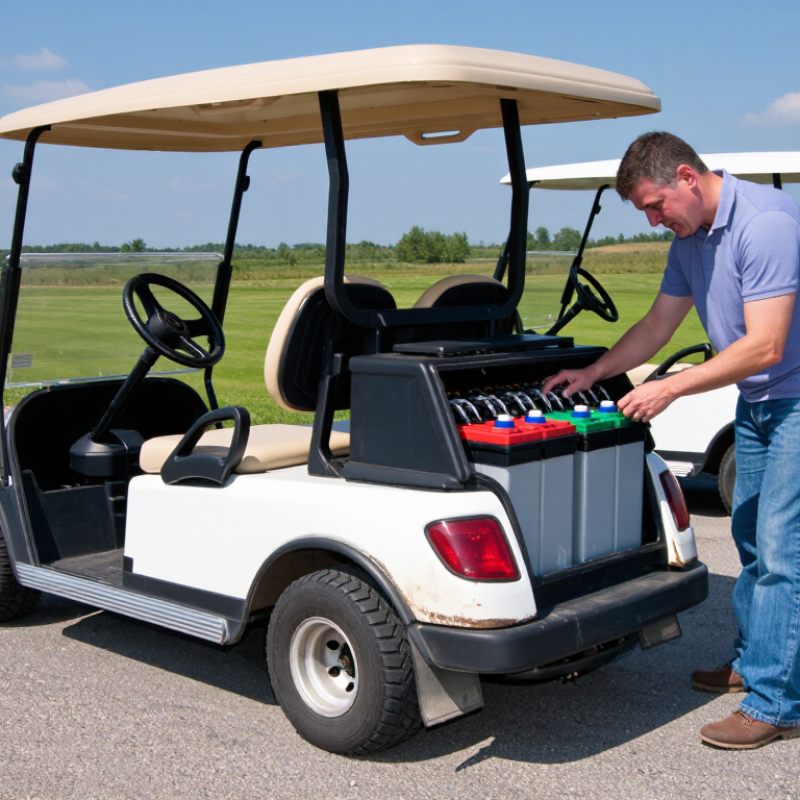
Before viewing a used golf cart, define how you will use it. A cart for short neighborhood trips needs different features from one used on private grounds or sloped paths. Write down the expected passenger count, driving distance, terrain, storage needs, and weather exposure. I once underestimated steep driveways, and a seemingly suitable cart struggled badly. That mistake changed how I evaluate motor power and braking performance.
Set a firm budget before negotiating. Include the purchase price, inspection, transport, battery replacement, tires, lights, and routine servicing. Leave a repair reserve because older carts often reveal problems after several hours of use. A low price may hide worn batteries, loose steering, cracked suspension parts, or weak brakes. Ask for maintenance records, but verify them against the cart’s actual condition. Records help. They do not prove everything.
Match the cart to practical requirements, not attractive extras. Check whether the battery type suits your charging access and daily schedule. Measure your garage or storage area before choosing a larger body or rear seat. Test the cart on a quiet, authorized route, listening for grinding, clicking, or unusual vibration. Inspect the frame for rust and previous impact damage. Confirm that the serial information is clear and consistent with available records. If you cannot judge the electrical system, pay a qualified technician for an independent inspection. That cost is easier to accept than discovering a major fault later.
A used golf cart’s age can reveal more than its appearance. Check the production plate, serial information, and battery date codes. A cart may look modern after cosmetic repairs, yet still contain older mechanical parts. Battery age matters greatly, especially for electric models. Replacement costs can change the purchase price quickly.
Inspect the frame, floorboards, and underside for cracks, rust, or fresh paint hiding damage. Uneven tire wear may indicate alignment or suspension problems. Turn the steering wheel slowly and listen for clicks. Test the brakes on flat ground. The cart should stop smoothly without pulling to one side. Check the lights, horn, reverse function, charger, and dashboard indicators. Small faults often become expensive distractions.
Maintenance records add useful evidence. Look for battery checks, brake adjustments, tire replacements, and charger repairs. Incomplete records do not always mean neglect, but they require caution. Ask who performed the work and when. A seller who cannot explain repeated repairs may be hiding uncertainty, or simply have poor paperwork. Both situations deserve attention. I once underestimated a clean-looking battery compartment; corrosion underneath later suggested years of moisture exposure. A professional inspection is worth considering before payment, even when the test drive feels normal.
Inspect the cart’s age, condition, battery system, and maintenance history before making an offer.
The chart shows generalized service-life ranges for major golf-cart components. Actual life depends on climate, storage, usage, charging habits, and maintenance records.
When inspecting a used golf cart, look beyond the polished body. The battery often reveals its real condition. Check each battery case for cracks, swelling, leaks, or heavy corrosion around the terminals. A clean compartment is encouraging, but it proves little. Ask for the battery’s age and service records. Then test its voltage and capacity under load, not only at rest. A battery may show a healthy reading while losing power quickly on a hill.
Listen to the motor during acceleration. Smooth operation is normal; grinding, jerking, or unusual heat deserves attention. Check the cables, connectors, and motor housing for burnt marks or loose fittings. Test the charger after driving the cart. It should connect securely and charge consistently without excessive noise or heat. Match its output to the cart’s required specifications. I once trusted a quiet charger too quickly, and later found it stopped charging after several minutes.
Inspect the electrical system carefully. Turn on the lights, horn, reverse alarm, display, and any other installed equipment. Watch for flickering, slow responses, or wires repaired with ordinary tape. Examine the main fuse, solenoid, controller, and grounding points for corrosion. Drive forward and reverse several times, then test braking on level ground. Take notes during the inspection. Memory becomes unreliable when small faults start adding up.
7 Tips for Buying a Used Golf Cart: What to Look For
A polished body can hide expensive problems. Start underneath. Inspect the frame for cracks, fresh paint, bent rails, or rust around mounting points. Tap suspicious areas and compare both sides. A clean-looking repair is not automatically a safe repair. Check the tires for uneven wear, sidewall cuts, dry cracking, and mismatched sizes. Confirm the pressure with a gauge, not your thumb. The National Highway Traffic Safety Administration warns that incorrect tire pressure reduces handling and increases stopping risk.
Test the brakes on level ground at walking speed. The pedal should feel firm and stop the cart without pulling sideways. Listen for grinding. Inspect cables, drums, pads, and fluid leaks where applicable. Steering should respond immediately, without excessive play or clunking. Lift the front wheels slightly if possible, then check tie rods and wheel bearings. I would not trust a short driveway test alone. Small faults often appear during repeated braking or tight turns.
Check headlights, brake lights, reflectors, horn, seat belts, mirrors, and the parking brake. These details matter around pedestrians. A U.S. Consumer Product Safety Commission analysis estimated about 15,000 golf-cart-related injuries received emergency treatment each year during 2007–2009. Ask for maintenance records, battery dates, charger operation, and evidence of water damage. The batteries may look acceptable, yet fail under load. Let a qualified technician perform a load test before purchase.
Before discussing condition, verify who legally owns the golf cart. Ask for the original purchase record, serial number, and a matching seller identification document. Check that every number matches the cart frame and paperwork. Request written proof that no loan, lien, or ownership dispute remains. A missing document is a warning sign. Do not accept vague explanations.
Confirm whether the cart meets local requirements for its intended use. Rules may differ between private property, public roads, and shared communities. Ask the relevant local authority about registration, lighting, mirrors, brakes, speed limits, and insurance. Inspect safety equipment in daylight. Test the brakes, steering, lights, tires, and battery compartment carefully. A short ride can reveal unusual vibration or weak stopping power. Still, it cannot replace a professional inspection.
Agree on the final price in writing. Include taxes, delivery, repairs, replacement batteries, and any promised accessories. Ask whether the price changes after inspection. Compare the seller’s estimate with two independent repair quotes. I would not trust a polished appearance alone. Some faults are quiet and expensive. Take photographs of the cart, documents, and meter reading before payment. Leave space for doubt; buyers often regret rushing when paperwork seems almost complete.
Check the production plate, serial information, and battery date codes. Cosmetic repairs can make an older cart look newer.
Inspect the frame, floorboards, and underside for cracks, rust, bent rails, or fresh paint. Tap suspicious areas gently. Compare both sides.
Look for cracked cases, swelling, leaks, and heavy terminal corrosion. Ask about its age and service history. Test voltage and capacity under load, not only at rest.
Listen for grinding, jerking, unusual heat, or slow acceleration. The charger should connect securely and charge consistently. Quiet does not always mean reliable.
Test the lights, horn, reverse function, display, fuse, controller, and grounding points. Watch for flickering or slow responses. Tape-repaired wires deserve caution.
Check tire pressure with a gauge, plus sidewall cuts, dry cracks, and uneven wear. Test braking on level ground at walking speed. The cart should stop smoothly without pulling sideways.
Check headlights, brake lights, reflectors, mirrors, seat belts, horn, and parking brake. These features matter near pedestrians. Small details protect people.
Records should show battery checks, brake work, tire replacements, and charger repairs. Incomplete paperwork does not prove neglect, but it increases uncertainty. Ask who performed each repair and when.
Yes, especially when the test drive feels normal but records are incomplete. A technician can inspect hidden corrosion and perform a battery load test. I would not rely on appearance alone.
Buying a used golf cart starts with understanding how you plan to use it, such as for golf courses, private property, transportation, or light utility work. Set a realistic budget that includes possible repairs, replacement parts, and ongoing maintenance. When asking, “What should I look for when buying a used golf cart,” begin by checking its age, overall condition, service records, and signs of neglect or damage. A clean history and consistent maintenance can indicate better reliability.
Pay close attention to the battery condition, motor performance, charger, wiring, and other electrical components. Inspect the frame for rust or cracks, and test the tires, brakes, steering, suspension, lights, seat belts, and other safety features. During a test drive, listen for unusual noises and confirm that the cart accelerates, stops, and turns smoothly. Finally, verify the seller’s ownership documents, serial information, required safety or registration details, and the complete purchase price before making a decision.

Tulip Cart