When you hear the loud pop of a gas golf cart backfiring, it's certainly alarming. Many owners wonder, "Why does my gas golf cart backfire?" Understanding this issue is crucial for maintaining both performance and safety. According to the National Golf Cart Association, a significant percentage of gas-powered carts experience backfiring, often signaling deeper mechanical problems.
Common causes can include improper fuel mixture, ignition timing errors, or exhaust system issues. For instance, research shows that a poorly maintained carburetor can lead to that disruptive backfire. This not only affects your ride quality but can also pose risks if left unaddressed. Additionally, a study by the American Society of Golf Course Architects indicates that regular maintenance can prevent over 70% of common backfiring issues.
Engaging with these concerns proactively establishes your credibility as a cart owner. It's essential to seek expert guidance when troubleshooting these backfire problems. Sometimes the simplest solutions can be overlooked, leading to frustrating and potentially costly outcomes. Your golf cart deserves careful attention to thrive on the course.
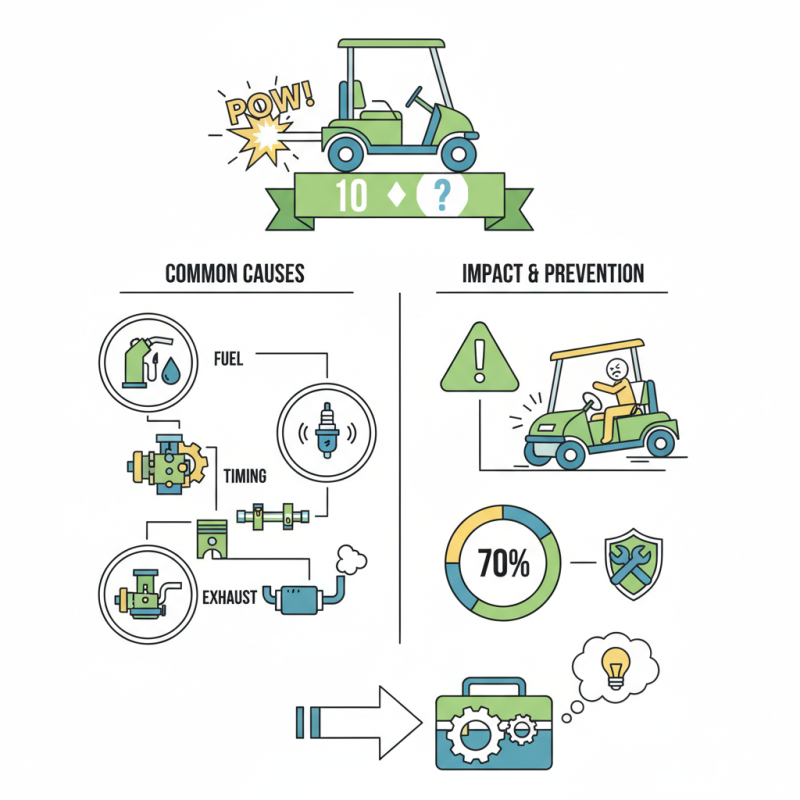
Gas golf carts are popular for their convenience and efficiency. However, backfiring can create frustration for owners. Understanding common causes is crucial for effective troubleshooting.
One reason for backfiring is improper fuel mixture. If the air-fuel ratio is off, combustion can be inconsistent. This often leads to backfire sounds. Another cause is a faulty spark plug. A worn-out or damaged spark plug may fail to ignite the fuel properly. Check your spark plugs regularly for wear signs. Ignoring this can worsen backfiring problems.
Exhaust system issues can also contribute to backfiring. A leak in the exhaust can allow gases to escape, causing backfire sounds. Fuel injection problems may also be at play. Dirty injectors can lead to uneven fuel delivery. Keeping the fuel system clean is vital for optimal performance. Regular maintenance checks can help identify these problems early.
Gas golf carts are popular for their simplicity and efficiency. Understanding the engine and exhaust system is essential for troubleshooting issues like backfiring. Backfiring often stems from problems in the fuel and air mixture. If the mixture is too rich or too lean, it can create combustion issues. This can lead to loud pops or bangs from the exhaust.
Another common reason for backfiring is a faulty exhaust system. Any leaks in the exhaust can disrupt the flow of gases. This disruption can cause pressure build-up, resulting in backfire sounds. An inspection can reveal cracks or loose connections that need fixing. Regular maintenance is key. Ignoring these issues can lead to more significant engine damage over time.
As you drive your gas golf cart, pay attention to changes in noise and performance. Unusual sounds can indicate underlying problems. Check the engine regularly and listen closely to any signs of distress. Doing so can prevent frustrating experiences and enhance the lifespan of your golf cart.
| Reason | Description | Potential Solution |
|---|---|---|
| Improper Fuel Mixture | Too rich or too lean fuel can cause backfiring. | Adjust the carburetor settings. |
| Worn Engine Components | Worn valves or piston rings can lead to gas escaping and causing backfire. | Inspect and replace worn engine parts. |
| Faulty Ignition System | A malfunctioning ignition can spark at the wrong time. | Check for and replace faulty spark plugs or wires. |
| Exhaust System Leaks | Leaks can cause back pressure and misfire. | Inspect and seal any leaks in the exhaust system. |
| Dirty Air Filter | A clogged air filter restricts airflow. | Clean or replace the air filter. |
| Incorrect Timing | Ignition timing that is too far advanced or retarded can cause issues. | Adjust the ignition timing to the manufacturer specifications. |
| Overheated Engine | An engine that runs too hot can lead to pre-ignition. | Check the cooling system for any malfunctions. |
| Use of Low-Quality Fuel | Poor quality fuels can cause engine performance issues. | Switch to a higher quality fuel. |
| Excessive Backpressure | Too much backpressure can disrupt engine function. | Ensure exhaust system is free from obstructions. |
| Malfunctioning Fuel Injector | A stuck or leaking fuel injector can cause over-fueling. | Clean or replace the fuel injector as needed. |
Many factors can influence why a gas golf cart backfires, notably fuel quality and mixture. Poor-quality fuel often contains impurities that disrupt combustion. This can lead to incomplete burning of the fuel. When the air-fuel mixture is not balanced, it can create excess fuel that ignites later in the exhaust system, causing a backfire.
The correct fuel mixture is essential. The optimal balance ensures efficient combustion. If the mixture is too rich, unburned fuel can ignite unexpectedly. On the other hand, a lean mixture may lead to overheating and damage. Both scenarios stress the engine components. Using a fuel stabilizer can help maintain quality over time. Regular checks and adjustments can prevent many issues.
Reflecting on the maintenance routine can uncover potential problems. Are you using fresh fuel regularly? Have you checked the carburetor settings? These questions can guide you to a more dependable setup. Simple adjustments can make a significant difference. Proper attention to fuel quality is more than just a routine; it’s a key to performance.
The ignition system plays a crucial role in the performance of your gas golf cart. When it malfunctions, you may notice backfiring, which can be alarming. This issue often results from a weak spark. A weak spark leads to incomplete combustion, causing fuel to accumulate in the engine. Eventually, it ignites and results in a backfire.
Moreover, faulty spark plugs can significantly impact your cart's performance. Worn-out or dirty plugs fail to ignite fuel efficiently. This can lead to increased emissions and poor engine performance. You might also experience rough idling or stalling. Regular maintenance of the ignition system is essential for optimal performance.
Another aspect to consider is the ignition timing. If the timing is off, it can result in inefficient fuel usage and backfiring. An engine that runs too rich or too lean can also contribute to this issue. Understanding these nuances helps you grasp how the ignition system affects your golf cart's operation. Finding and fixing these problems can lead to a smoother ride.
Gas golf carts are popular for their efficiency and ease of use.
However, backfiring can be a frustrating issue. Regular maintenance is key to preventing this problem.
One study by the Golf Car Manufacturers Association found that nearly 40% of gas golf cart backfires stem from
fuel system issues, including clogged fuel filters and worn fuel lines.
Checking and replacing these components regularly can significantly enhance performance. Inspect the carburetor for dirt and debris.
A clean air filter is essential. If it’s blocked, the engine may misfire, leading to backfiring. Replacing the filter every 50 hours of use is a good practice.
Spark plugs also play a critical role. They need to be in good condition for efficient ignition.
The National Automotive Technicians Education Foundation recommends inspecting spark plugs every season.
A simple visual check can reveal wear or corrosion. Neglecting these details can invite more serious issues down the line.
Even a small oversight—like a loose wire—can trigger backfiring, signaling the importance of thorough inspections.
: Backfiring often results from an incorrect air-fuel mixture or a faulty exhaust system.
Poor fuel quality can lead to incomplete combustion, causing backfires in the exhaust system.
A clean carburetor prevents dirt build-up, ensuring a balanced fuel mixture essential for smooth operation.
It’s recommended to replace the air filter every 50 hours of use to prevent misfires.
Spark plugs ensure efficient ignition; worn plugs can lead to performance issues and backfiring.
Regularly check the fuel system, carburetor, air filter, and spark plugs for any signs of wear or dirt.
A fuel stabilizer improves fuel quality over time, preventing combustion issues and potential backfires.
Unusual sounds during operation may indicate underlying issues needing immediate attention.
Ignoring maintenance can lead to serious engine problems, reducing the lifespan of your golf cart.
Regularly check fuel mixture settings and ensure all components are clean and tightened to avoid issues.
Understanding "Why does my gas golf cart backfire" involves examining several key factors that can affect performance. Common causes include engine and exhaust system issues, where improper functioning can lead to incorrect air-fuel mixture and exhaust back pressure. Additionally, the quality of fuel used in the golf cart plays a significant role, as subpar fuel can alter combustion efficiency, resulting in backfiring.
Moreover, problems with the ignition system, such as faulty spark plugs or incorrect timing, can exacerbate backfiring issues. Regular maintenance is crucial to prevent these problems, including checking fuel quality, inspecting the ignition system, and ensuring the engine and exhaust systems are functioning properly. By paying attention to these aspects, golf cart owners can effectively address the question: "Why does my gas golf cart backfire," and enhance their vehicle's performance and reliability.

Tulip Cart