Why does my gas golf cart backfire? The sharp pop from the muffler can feel alarming, especially on a quiet course or driveway. It may sound like an engine failure, but backfiring often begins with a small imbalance in fuel, air, ignition, or exhaust flow.
Golf-cart technician James R. Miller explains, “A backfire is a symptom, not a diagnosis.” That warning matters. A dirty air filter can restrict breathing. A lean carburetor mixture can make combustion unstable. A worn spark plug, loose plug wire, incorrect ignition timing, or damaged exhaust valve can create the same startling result. Even stale gasoline may contribute.
Some clues appear in ordinary moments. The cart may pop after releasing the accelerator. It may hesitate while climbing a hill. You might smell raw fuel near the carburetor, or see black soot around the muffler. These details help separate fuel problems from valve or ignition faults. Guessing can waste time. That assumption can be wrong.
This guide examines the top ten reasons gas golf carts backfire, from simple maintenance oversights to deeper mechanical faults. It also explains what an experienced owner can inspect safely, such as the air filter, spark plug, fuel lines, and carburetor linkage. Do not ignore repeated bangs. A backfire may damage the muffler, air box, or intake components. Stop the engine if fuel leaks, flames, or heavy smoke appear. Small engines punish careless confidence. A careful diagnosis protects the cart, the driver, and everyone nearby.
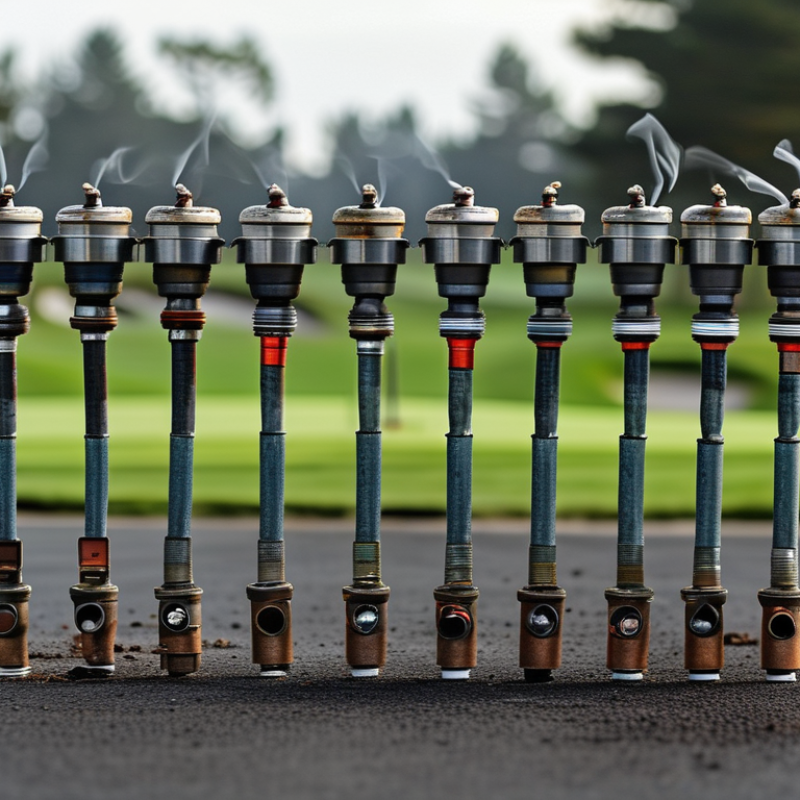
A backfire means fuel ignites outside the combustion chamber. It may erupt through the carburetor or pop inside the exhaust. The sound can be sharp, like a small firecracker under the seat. In practice, the location matters. A carburetor backfire often points to incorrect ignition timing, a lean fuel mixture, or a damaged intake valve. An exhaust pop may result from unburned fuel entering a hot muffler. A clogged air filter, worn spark plug, weak plug wire, or loose exhaust connection can also contribute. Even deceleration can expose a mixture problem. A quick guess can be wrong.
Technicians usually inspect the spark, fuel delivery, air intake, valve condition, and timing together. Check for cracked hoses, loose wiring, and black or unusually white spark-plug deposits. These small clues help separate fuel problems from ignition faults. Do not ignore repeated bangs. They can damage the air box or signal poor engine control. My practical mistake would be replacing parts too early. Testing first saves money and prevents a second fault from being missed.
Tips: Let the engine cool before inspection. Keep hands away from moving belts. Use the cart’s service manual for timing specifications. If the engine backfires repeatedly, stop driving and ask a qualified technician to test compression and ignition timing. Record when it happens, especially during startup, acceleration, or downhill coasting. That detail can shorten diagnosis.
Top 10 Reasons Why Your Gas Golf Cart Backfires
Common Ignition Problems That Cause Golf Cart Backfires
In a gas golf cart, a backfire often points to an ignition problem. When the spark arrives late, unburned fuel can ignite in the exhaust. That sharp pop is a warning. Start with the spark plug. A worn electrode, cracked insulator, or heavy carbon deposit can weaken the spark. Remove it only after the engine cools, then inspect the gap against the service manual. Do not guess the gap. Small errors matter.
A loose plug wire may look connected but fail under vibration. Look for brittle insulation, white tracking marks, or corrosion around the terminal. Moisture near the ignition coil can also create an intermittent misfire. Dry the area and check the ground connection. On older carts, a weak coil may produce a thin orange spark instead of a crisp blue one. Use an approved tester rather than holding the wire by hand. That shortcut is unsafe.
Incorrect ignition timing can trigger backfires even when the plug looks clean. Check whether the timing mark moves smoothly and matches the specified position. Models with electronic triggers may suffer from a damaged sensor or loose connector. I have seen a cart run normally at idle, then backfire during acceleration because vibration opened a poor connection. It is easy to blame the carburetor too quickly. Inspect the ignition circuit first, and record each test result before replacing parts.
| No. | Common Cause | How It Causes a Backfire | Typical Symptoms | Practical Diagnostic Check | Recommended Corrective Action | Potential Risk |
|---|---|---|---|---|---|---|
| 1 | Incorrect ignition timing | The spark occurs too early or too late, allowing combustion to continue as the exhaust valve opens or causing the mixture to ignite in the intake. | Sharp popping during acceleration, uneven power, difficult starting, or a sudden backfire when the throttle is opened. | Inspect the timing mechanism according to the engine service procedure and check whether timing changes smoothly with engine speed. | Correct the timing adjustment and repair or replace worn timing components. Use the engine’s specified timing values. | High |
| 2 | Worn or damaged spark plug | A cracked insulator, eroded electrode, or excessive gap can produce a weak or inconsistent spark, leaving unburned fuel in the exhaust. | Hard starting, misfiring, poor acceleration, increased fuel use, or a blackened, wet, or unusually worn plug. | Remove and inspect the plug, measure the gap, and compare its condition with the engine manufacturer’s specifications. | Install the correct type of spark plug and set the specified gap. Replace plugs with damaged insulators or badly worn electrodes. | Medium |
| 3 | Faulty ignition wire or boot | Cracks, moisture, corrosion, or excessive resistance can cause the spark to leak before reaching the plug. | Intermittent misfire, backfire in damp conditions, visible arcing, or an engine that runs worse under load. | Inspect the wire and boot for damage, ensure the connections are tight, and test resistance if a service specification is available. | Replace damaged ignition leads or boots, clean corroded terminals, and keep the connection firmly seated on the plug. | Medium |
| 4 | Weak or failing ignition coil | A coil that cannot produce adequate voltage may cause incomplete combustion and intermittent ignition, especially when the engine is hot or under load. | Loss of power after warm-up, intermittent stalling, weak spark, and repeated misfires during acceleration. | Test primary and secondary coil resistance only against the correct service specifications, and verify that the coil receives proper power and ground. | Repair wiring or grounds as needed and replace the coil if its measured values or output do not meet specifications. | High |
| 5 | Defective ignition module or pickup sensor | The ignition control circuit may trigger the spark at the wrong time or fail to trigger it consistently, causing combustion outside the cylinder. | Random backfires, sudden cutout, no-start condition, or a fault that appears after the engine reaches operating temperature. | Check wiring, connectors, grounds, and the ignition signal with the appropriate test equipment; follow the engine-specific diagnostic procedure. | Repair damaged wiring or connections and replace the failed control component after confirming the diagnosis. | High |
| 6 | Lean air-fuel mixture | Too much air or too little fuel can slow combustion and increase the chance that burning mixture reaches the intake or exhaust system. | Hesitation, surging, elevated engine temperature, pale spark-plug deposits, or popping through the intake during acceleration. | Inspect for intake leaks, restricted fuel flow, blocked jets, and correct fuel-system adjustments. Do not rely on plug color alone. | Repair air leaks, clean fuel passages, restore fuel delivery, and adjust the mixture only within the specified limits. | High |
| 7 | Dirty carburetor or restricted fuel passage | Deposits in the jet, float valve, or fuel passage can create an unstable mixture that misfires and sends unburned fuel into the exhaust. | Surging, poor throttle response, stalling when opening the throttle, fuel odor, or inconsistent operation. | Check fuel flow, inspect the fuel filter, and clean the carburetor using a suitable procedure without enlarging calibrated openings. | Clean or rebuild the carburetor, replace contaminated fuel or filters, and verify float level and fuel delivery. | Medium |
| 8 | Clogged or incorrectly adjusted air filter | A restricted filter can make the mixture excessively rich, while an improperly fitted filter can disturb airflow and fuel metering. | Sluggish acceleration, dark exhaust, rough running, poor fuel economy, or popping when the throttle is released. | Inspect the filter for dirt, oil, moisture, or damage and confirm that the housing and seals are installed correctly. | Replace or clean the filter according to its design, repair air-box seals, and verify correct airflow. | Low |
| 9 | Exhaust leak near the cylinder head | Outside air can enter a hot exhaust stream, allowing unburned fuel or hot exhaust gases to ignite in the muffler or exhaust pipe. | Popping mainly during deceleration, a ticking sound, visible soot, or a noticeable exhaust smell near the engine. | Inspect the exhaust flange, gasket, pipe, and muffler for loose fasteners, cracks, or black soot marks; check only when the system is cool. | Replace damaged gaskets or exhaust parts and tighten fasteners to the specified torque. | High |
| 10 | Valve clearance or valve-timing problem | Incorrect valve clearance or a worn timing component can prevent proper sealing or alter the combustion cycle, causing intake or exhaust backfire. | Hard starting, low compression, tapping noise, reduced power, persistent misfire, or backfire that remains after ignition parts are checked. | Measure valve clearance, perform a compression test, and inspect valve and timing components according to the service manual. | Adjust valve clearance or repair the valve-train and timing system. Replace damaged components before continued operation. | High |
| Safety note: Always switch off the engine, allow hot components to cool, disconnect the battery when appropriate, and keep fuel and ignition sources away from open flames. Persistent backfiring should be diagnosed before continued use because it may damage the intake, exhaust, or engine. | ||||||
Fuel, Airflow, and Carburetor Issues Behind Backfiring
A gas golf cart usually backfires when fuel burns at the wrong moment. In my workshop experience, stale fuel is a frequent cause. A clogged fuel filter can also starve the engine. Then, unburned fuel reaches the hot exhaust. A loose fuel line may create another problem. Check for damp spots, cracked rubber, or a strong fuel smell.
Airflow matters just as much. A dirty air filter restricts oxygen and creates a rich mixture. A blocked intake can produce similar symptoms. On the other hand, an intake leak allows excessive air into the engine. Listen for a sharp hiss near the carburetor. Inspect gaskets and hose connections carefully. Small leaks can be surprisingly difficult to find.
Carburetor trouble often completes the list of causes. A stuck float may flood the engine. A dirty jet can deliver too little fuel. Incorrect mixture settings, a damaged needle, or a weak choke can also trigger backfiring. The ignition timing and spark plug deserve inspection too. I once blamed the carburetor immediately, but a loose intake gasket caused the noise. That mistake changed my testing routine. Work with a cool engine, keep flames away, and adjust one part at a time. A service manual helps prevent guesswork.
A gas golf cart backfires when burning fuel reaches the exhaust, or combustion starts at the wrong moment. The U.S. EPA’s National Emissions Inventory tracks nonroad gasoline engines as major carbon monoxide sources, but it does not isolate golf carts. That limitation matters. A backfire is not harmless noise.
Inspect the exhaust first. A cracked muffler, loose flange, or damaged gasket can pull oxygen into hot exhaust gases. Look for black soot around joints. Then check the valve train. Tight valve clearance may keep an exhaust valve slightly open, allowing flame to escape. A compression test can reveal a weak valve, worn seat, or damaged piston. Compare cylinders, rather than trusting one reading.
Engine timing deserves careful attention. A sheared flywheel key, loose ignition component, or incorrect plug gap can shift the spark. The spark may arrive while the exhaust valve remains open. SAE J1349 emphasizes controlled engine testing because timing and temperature strongly affect performance measurements. That principle applies here. Let the engine cool, isolate the battery, and keep hands away from moving parts. Fuel vapor can ignite quickly. OSHA identifies carbon monoxide as a serious hazard in enclosed service areas. I have seen technicians blame the carburetor too soon. Sometimes the real fault is a small exhaust leak or an overlooked valve adjustment.
Backfiring usually occurs when unburned fuel reaches a hot exhaust component or when combustion happens at the wrong point in the engine cycle. Start with ignition timing, valve operation, fuel mixture, and exhaust leaks before replacing major parts.
A high-priority inspection should begin with ignition timing, exhaust leaks, and exhaust-valve clearance because these faults can allow combustion to occur outside the cylinder or at the wrong crankshaft position. If those checks are normal, inspect the spark plug, ignition coil, carburetor, air filter, intake valve, and carbon buildup.
A gas golf cart can backfire when unburned fuel ignites in the exhaust system. Common causes include a dirty air filter, weak spark, incorrect ignition timing, or a loose exhaust connection. A lean fuel mixture can also make combustion unstable. The sound may be sharp and startling. Treat it as a warning, not a harmless quirk.
Park the cart outdoors on level ground and allow the engine to cool completely. Keep cigarettes, flames, and electrical sparks away. Check for fuel leaks, cracked hoses, damaged wiring, and a loose muffler. Do not place your hands near hot components. If fuel smells strong, stop the inspection and seek qualified service. Safety comes first.
Use the service manual to inspect the spark plug, air filter, and fuel system. Replace damaged parts with correctly specified components. Check ignition timing only with suitable tools and proper guidance. A common mistake is adjusting the carburetor before finding an air leak. That can hide the real problem. I would not keep driving after repeated backfires, even if the cart still moves.
Record when the backfire occurs, such as during starting, acceleration, or deceleration. This detail helps a technician identify the fault. Regular filter replacement, secure exhaust fittings, and scheduled tune-ups reduce repeat problems. Still, maintenance schedules can be overlooked. That small omission often becomes an expensive repair.
: Backfiring happens when fuel burns at the wrong time. Unburned fuel may ignite inside the hot exhaust.
Yes. Old fuel can burn poorly and leave unburned fuel behind. A strong fuel smell needs immediate attention.
A dirty air filter restricts oxygen and creates a rich mixture. An intake leak adds excessive air.
Listen for a sharp hiss near the carburetor. Inspect cracked hoses, loose connections, and dark gasket edges.
A stuck float can flood the engine. Dirty jets, damaged needles, and weak chokes can also disturb fuel delivery.
Yes. A cracked muffler or loose flange may draw oxygen into hot exhaust gases. Look for black soot around joints.
Tight valve clearance can leave an exhaust valve partly open. A damaged flywheel key or incorrect plug gap can shift ignition timing.
Park outdoors on level ground. Let the engine cool completely. Keep flames, cigarettes, and sparks away.
I would not. Repeated backfires may indicate fuel leaks, wiring damage, valve problems, or exhaust faults.
Record when the sound occurs: starting, acceleration, or deceleration. Check the spark plug, air filter, fuel lines, and exhaust fittings.
A gas golf cart backfires when fuel ignites at the wrong time, often producing a sharp pop from the carburetor or exhaust. If you are asking, “Why does my gas golf cart backfire,” the cause may involve several connected systems. Common ignition problems include a worn spark plug, damaged plug wire, weak ignition components, or incorrect spark timing. Fuel and airflow issues can also create an overly rich or lean mixture, especially when the carburetor is dirty, improperly adjusted, or affected by a restricted air filter.
Other possible causes include a clogged fuel passage, exhaust blockage, leaking valve, incorrect valve clearance, or engine timing that is out of adjustment. Safe diagnosis should begin with allowing the engine to cool, checking for loose connections and visible damage, and inspecting the air, fuel, ignition, and exhaust systems carefully. Repeated backfires should not be ignored; regular maintenance, clean filters, proper adjustments, and professional inspection when needed can help prevent engine damage and improve reliable operation.
Tulip Cart